October 6th, 2026
7 min read
Ask your agent who your customers are

Today we're releasing the Minerva MCP, live as a connector in Claude and ChatGPT. Ask your agent for Personas, and it will show you who your best customers are and how to find more.
The best marketers know their customers better than anyone else. They know who buys, what they care about, what stopped them last time and how to find the next thousand like them. The budget, message and channel all follow from that knowledge.
Most brands we talk to have millions of contacts and struggle to understand their data at that scale. Their data has no opinion: it won’t say which of these people matter, why they matter, and what to do next.
Our two releases today close that gap. The Minerva MCP puts Minerva inside Claude, ChatGPT or any assistant you already work with. Personas tells you who your best customers are, why they buy, and how many more people like them exist. You can use Personas in the Minerva platform, or ask for them through the MCP.
The ceiling on every marketing agent
Point Claude at your warehouse and it's useful. In seconds, you can learn how many people bought last quarter, how often and how recently.
Now ask who those people are. It answers just as fast and just as confidently, but it's guessing. Your warehouse stores what people did, but holds nothing about what they earn, what they own or why they were interested in the first place.
Every marketing platform is shipping agents this year, and the models underneath them are largely the same. What separates one agent from another is the context it can leverage.
Minerva is the AI platform for marketing leaders. We help companies better understand, engage and acquire customers. Every other marketing tool works with the data you already have. Minerva brings its own: income, net worth, occupation, demographics and interests across 270mm+ U.S. profiles and 1,000+ attributes, refreshed every day.
The Minerva MCP
The Minerva MCP is live today as a connector in ChatGPT and Claude, and it works with any client that supports MCP.

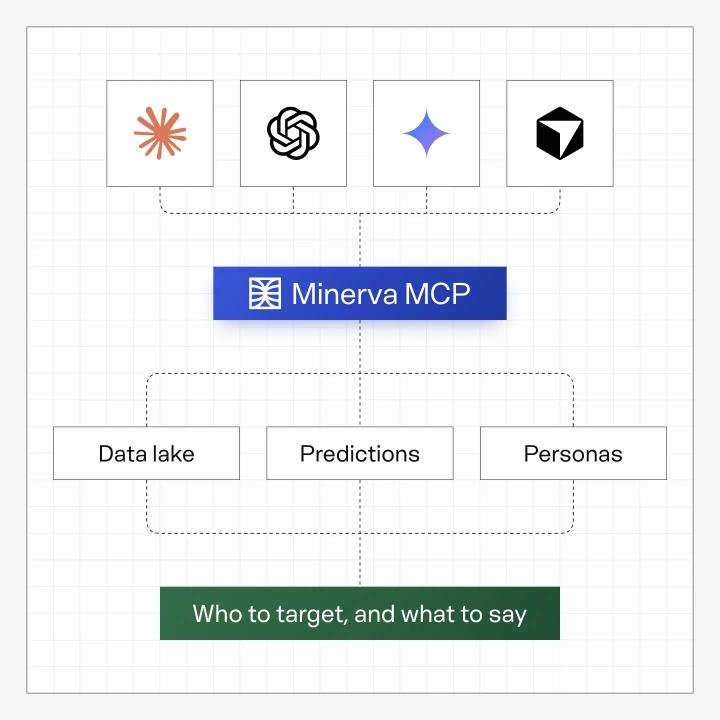
Sign in with your Minerva account and your assistant can:
- Find people who match a description, across Minerva's 270mm U.S. profiles or inside your own customer list
- Enrich your records with Minerva's consumer attributes: income, net worth, occupation, household, property, interests
- Build personas from your customer data, ask questions about any of them, and build context on the individual people in it
- Query your own customer and order data
- Build an audience and activate it via Meta, Google Ads, HubSpot, Salesforce, Klaviyo, Lob or a variety of other destinations
Your model does the reasoning, and Minerva supplies the facts. When your assistant asks for an audience, it writes a description of the people it wants. Minerva's engine turns that description into a rule and evaluates the rule against real records, exactly as it does in our platform. You get a list that you can open, count and explain.
How teams use it
Take one example persona from a luxury vacation rental brand: senior professionals in their forties who own their homes, drive European luxury cars, don't hunt for bargains and book mountain stays more than anyone else on the list. Here's what each team asks Minerva about them, in ChatGPT or Claude:
- Growth:
- Ask: Cost per booking is up 40%. Are these people worth Q4 spend, and how many more can we reach?
- Minerva’s response: Their share of revenue, how many people are like them across the U.S. and an audience pushed to Meta with existing customers excluded.
- Lifecycle:
- Ask: We're focusing on winback opportunities this quarter. Which customers booked with us once and haven't come back in over a year? Split them into three groups we can message differently, based on where they live and who's in their household.
- Minerva’s response: Three Klaviyo lapsed-customer audiences, like Bay Area families with young kids or New York couples without children, each with an email written for that group. The bookings show who came once and stopped. Minerva adds who they are.
- Creative:
- Ask: I need a creative brief for the Meta campaign for our mountain lodges product catalog for ski season targeting East Coast young urban professionals with a high propensity to book multi-bedroom properties for group trips.
- Minerva’s response: What to lead with, what to avoid, the tone, the proof they need, and three headlines, all from the persona's evidence rather than a guess.
- Analytics:
- Ask: My finance team wants last quarter's revenue split by customer persona, month by month. Can you pull it?
- Minerva’s response: Each persona's share of revenue and buyers by month, compared against the rest of the customer base.
- Leadership:
- Ask: I'm building next month’s board deck. What's the TAM for our best-performing personas, and how much of it have we reached?
- Minerva’s response: How many Americans match the definition, and what share the brand has reached across each persona.
Personas: the first thing worth asking our agent to build for you
The persona you use today is a static document. Someone on your team (or at your agency) ran a workshop, developed ten types of customer with stock photos and it went into a deck. Ask that document which of your customers is found in Persona two and it has no answer. Ask whether Persona two spends more than Persona three and it can’t respond.
Your lifecycle segments have the opposite problem. Champion, lapsed, at risk. Each one records a moment in someone's relationship with your brand. It can say someone bought twice and then stopped. It can't say who that person is, why they were interested or where to find more like them.
Minerva’s Personas do both jobs. Connect your customer list and your orders, and Minerva joins them to what it knows about 270mm+ U.S. profiles. It returns the groups that actually exist in your file, ranked by the revenue they generate.

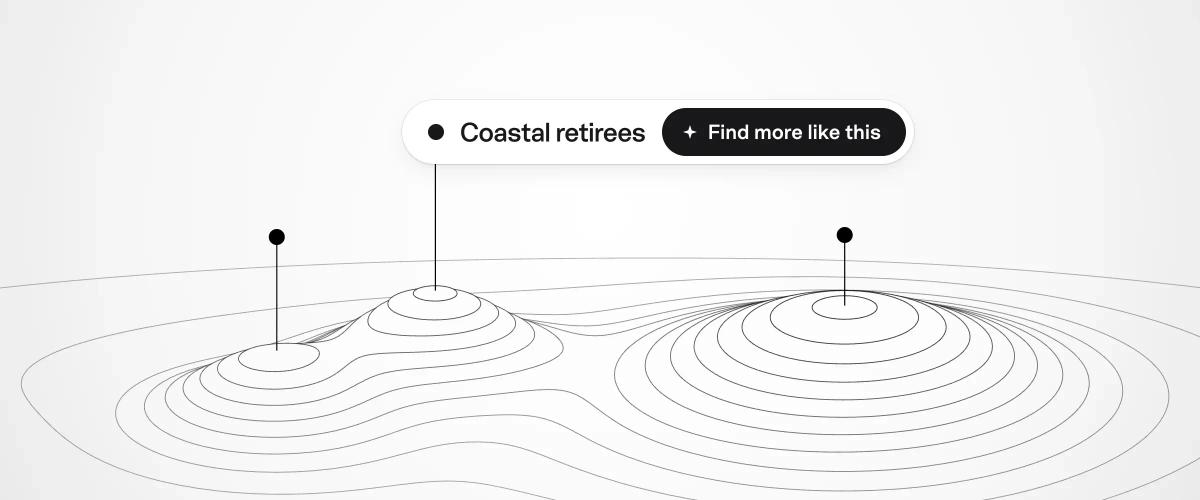
Each persona comes with:
- A simple description of who these people are
- How many are in your list and what share of revenue they represent
- What sets them apart from the rest of your customers and from the average American
- How they buy: first-time, repeat or lapsed, and how often
- Why they buy, what stops them, and how to talk to them
- A sample of the actual people in the group
- How many more like them live in the U.S.
When the data proves something, the page shows the number. When the data only suggests something, the page says so. Our models check every line against the data it came from and remove anything they can't verify.
Every persona is also a list you can interact with and activate. It works as a dimension in any analysis (funnel drop-off, repeat rate, seasonality by persona), and its membership refreshes every night as your customers change. Because the definition describes who people are, the same persona runs against the 270mm+ people outside your customer base in one click, with your existing customers already excluded.
Get started
Minerva’s MCP is live now. Add Minerva from the connector directory in Claude, ChatGPT or Muse, or connect any MCP client, and sign in with your Minerva account.
Personas needs your customer list and your orders connected, since orders are what rank them. If yours are connected, your personas are ready now and update every night. If you want to onboard your data, reach out to schedule a call and determine your fit.